Menu

Alzheimer’s Research Sites Honor National Clinical Trials Day

Free Memory Screenings Offered to Promote Importance of Brain Health

WASHINGTON, DC (May. 20, 2026)- Alzheimer’s research sites across the country are honoring National Clinical Trials Day by offering free memory screening for adults age 55 and older.  National Clinical Trials Day recognizes the progress made in developing treatments and therapies, advances which could not have been possible without clinical trials and the individuals who participate in them.

This initiative aims to increase awareness about the importance of early detection of memory loss and Alzheimer’s disease, particularly for individuals concerned about their own memory or that of a friend or family member. An estimated 7.4 million Americans living with Alzheimer’s disease in 2026[1], and that number is expected to grow. Increasing public understanding of brain health is critical to helping individuals make informed decisions about early screening, prevention, and participation in research.

Participating sites include

Northeast

Southeast

Midwest

South

West

Canada

Memory screenings can be scheduled by appointment at each participating site in a private setting. Following the scheduled assessment, individuals may meet one-on-one with a healthcare professional to review results and discuss any questions or concerns. While a memory assessment is not a diagnosis, it can guide individuals toward appropriate next steps.

Early detection of memory problems can provide access to more intervention options and improve quality of life. It may also help individuals learn whether they are eligible to participate in clinical trials focusing on slowing the progression of memory disorders.

For more information or to find a participating site, please contact the site nearest you directly.

For immediate release:    

For local media interested in highlighting a community research site, contact [email protected] for interviews. 

About the Global Alzheimer’s Platform Foundation (GAP): 
The international nonprofit Global Alzheimer’s Platform Foundation was founded to speed the delivery of Alzheimer’s treatments and other neurological therapies with a commitment to lowering the cost and improving the efficacy of ADRD clinical trials to ensure that no one is left behind. As part of its mission, GAP supports more than 100 clinical research sites worldwide through study start-up and recruitment activities, promoting the use of state-of-the-art biomarker technology and inclusivity in research studies, as well as celebrating the citizen scientists who make research possible. 


[1] https://www.alz.org/getmedia/ef8f48f9-ad36-48ea-87f9-b74034635c1e/alzheimers-facts-and-figures.pdf

TrialSite News: Alzheimer’s Diagnostics Race Accelerates as Global Alzheimer’s Platform Expands Bio-Hermes-002 Study

TrialSite Staff | Making Biomedical Research Evidence Accessible to All

May. 18, 2026, 2:30 p.m.

The global battle against Alzheimer’s disease may increasingly hinge on one critical factor: detecting the disease earlier, faster, and more accurately before irreversible neurological decline takes hold.

This week, the Global Alzheimer’s Platform Foundation (GAP) announced the continued expansion of its Bio-Hermes-002 observational study, with Sanofi joining a growing coalition of pharmaceutical, diagnostics, imaging, and digital biomarker companies seeking to transform Alzheimer’s diagnosis through blood-based and digital biomarkers.

The importance of the initiative is difficult to overstate.

Alzheimer’s disease and related dementias represent one of the largest emerging medical, economic, and societal threats facing aging populations worldwide. In the United States alone, millions of Americans currently live with Alzheimer’s disease, while costs associated with long-term care, caregiver burden, lost productivity, and institutional support already exceed hundreds of billions of dollars annually. As populations age across North America, Europe, and parts of Asia, those burdens are expected to surge sharply.

Yet diagnosis remains a major challenge.

Current approaches often rely on expensive PET imaging, MRI scans, specialist evaluations, or invasive procedures that limit widespread early detection. Bio-Hermes-002 seeks to address that gap by evaluating combinations of blood-based biomarkers, digital assessments, MRI, and PET imaging across diverse racial and ethnic populations to improve prediction and diagnosis of Alzheimer’s pathology, including amyloid and tau accumulation.

The study also reflects a broader transformation underway in neurodegenerative medicine: the convergence of AI-enabled analytics, biomarker science, cloud-based data sharing, and precision diagnostics.

If successful, studies like Bio-Hermes-002 could help shift Alzheimer’s care from late-stage management toward earlier intervention—potentially reshaping clinical trials, drug development, and patient outcomes worldwide. https://www.trialsitenews.com/a/alzheimers-diagnostics-race-accelerates-as-global-alzheimers-platform-expands-bio-hermes-002-study-db441cfe

Noah News: Sanofi joins global coalition to enhance blood biomarkers for earlier Alzheimer’s detection

The Global Alzheimer’s Platform Foundation expands the Bio-Hermes-002 study, incorporating Sanofi and other industry leaders, to refine blood and digital biomarkers for more inclusive, earlier diagnosis of dementia…

The Global Alzheimer’s Platform Foundation expands the Bio-Hermes-002 study, incorporating Sanofi and other industry leaders, to refine blood and digital biomarkers for more inclusive, earlier diagnosis of dementia across diverse populations.

The Global Alzheimer’s Platform Foundation has said it is widening its Bio-Hermes-002 research programme with Sanofi joining as a new partner, in a study that is looking at whether blood-based and digital biomarkers can improve the identification of Alzheimer’s disease and related dementias. The observational project also incorporates MRI and PET imaging and is intended to reflect a broad mix of racial and ethnic groups, according to the foundation.

The initiative builds on earlier Bio-Hermes-001 work and adds to a growing list of commercial collaborators, including several diagnostics and biotechnology groups already involved in the project. GAP said the latest contribution will help expand the biomarker dataset being assembled through the study, which is designed to compare the performance of individual and combined measures against established signs of disease such as amyloid and tau in the brain.

The foundation said study data will be stored on the AD Workbench, a secure cloud platform run by the Gates Ventures Alzheimer’s Disease Data Initiative, allowing researchers to access and analyse information across different systems. Other organisations already tied to Bio-Hermes-002 include Roche, Siemens Healthineers and Spear Bio, while LifeArc has separately said it is backing the project with UK Dementia Research Institute support for work on a finger-prick style blood test and an enrolment target of 1,000 participants across the UK, the US and Canada.

The expanded collaboration comes as drugmakers and diagnostics companies increasingly focus on blood-based tests as a less invasive route to earlier dementia detection, although the field still needs stronger validation before such tools can be widely adopted in routine care. GAP has positioned the study as part of a broader effort to speed research and lower trial costs, but the practical value of the biomarkers will depend on whether the combined data can consistently improve diagnosis across diverse patient groups.

Source Reference Map

Inspired by headline at: [1]

Sources by paragraph: – Paragraph 1: [2] – Paragraph 2: [2], [6] – Paragraph 3: [4], [5], [6], [7] – Paragraph 4: [3], [5], [6]

Source: Noah Wire Services

https://noah-news.com/sanofi-joins-global-coalition-to-enhance-blood-biomarkers-for-earlier-alzheimers

Global Alzheimer’s Platform Foundation Announces Strategic Collaboration and Partnership for the Transformative Bio-Hermes-002 Study

Bio-Hermes-002 is a collaborative study focused on new biomarkers designed to improve  
diagnosis of Alzheimer’s disease and dementias. 

Washington D.C., May 18, 2026 – The Global Alzheimer’s Platform Foundation® (GAP) is pleased to announce the continued expansion of the Bio-Hermes-002 study, a unique observational platform study, which evaluates blood-based and digital biomarkers across a wide spectrum of cognitive conditions, alongside MRI and PET imaging and diverse racial and ethnic populations, to generate data that may improve the prediction, detection, and diagnosis of Alzheimer’s disease and related dementias. Sanofi is the newest partner in this collaborative research effort.  

The Bio-Hermes-002 study collects data reflecting the performance of each biomarker in the study, or combination of biomarkers, to assess, diagnose or predict the presence of a variety of pathologies associated with Alzheimer’s disease and related dementias including amyloid and tau in the brain – hallmark characteristics of Alzheimer’s disease.

In Bio-Hermes-002, Sanofi will be analyzing additional biomarkers, augmenting our robust database and building upon findings from Bio-Hermes-001. 

“We’re proud to have Sanofi join the growing list of respected partners in the Bio-Hermes-002 study,” said John Dwyer, President of GAP.  “This collaboration will enrich the study and keep a focus on discovering the underlying causes of this cruel disease. We expect to make great strides for neurodegenerative research, and we are ready to see how this can transform the future of diagnostics.” 

Data from the Bio-Hermes-002 study will be stored on the AD Workbench from the Gates Ventures Alzheimer’s Disease Data Initiative (ADDI). The AD Workbench is a global, secure, cloud-based data sharing and analytics environment that enables researchers worldwide to share, access, and analyze data across multiple platforms.  

Sanofi joins a long list of industry leaders who are partners in this study, including Biogen, Eli Lilly and Company, IXICO, and Roche along with other exceptional partners?providing blood-based biomarker assessments or digital assessments for Bio-Hermes-002. To date, the partners include AINOSTICS, Alamar Biosciences,Beckman Coulter Diagnostics, Cambridge Cognition Limited, Cognivue, Cumulus Neuroscience Limited, Fujirebio, iLoF, LifeArc, Linus Health, Lucent Diagnostics–a Quanterix brand, Siemens Healthineers, Spear Bio, and ViewMind. 

For more information about the Bio-Hermes-002 study and how to participate, visit https://globalalzplatform.org/.

For immediate release:

Contact: [email protected]

About the Global Alzheimer’s Platform Foundation (GAP) 
The international nonprofit Global Alzheimer’s Platform Foundation was founded to speed the delivery of Alzheimer’s treatments and other neurological therapies with a commitment to lowering the cost and improving the efficacy of ADRD clinical trials to ensure that no one is left behind. As part of its mission, GAP supports more than 100 clinical research sites worldwide through study start-up and recruitment activities, promoting the use of state-of-the-art biomarker technology and inclusivity in research studies, as well as celebrating the citizen scientists who make research possible.

TrialSite News: Could a Blood Test Detect Alzheimer’s Earlier Than Brain Scans? 

Could Alzheimer’s disease one day be detected with a simple blood test instead of expensive brain scans? In this episode of the TrialSite News Farago Podcast, we speak with John Dwyer, President and CEO of the Global Alzheimer’s Platform Foundation (GAP), about the Bio-Hermes-002 study and the future of Alzheimer’s detection. The conversation explores how researchers are evaluating blood biomarkers, genetics, cognitive testing, and digital biomarkers alongside MRI and PET imaging to better understand how Alzheimer’s may be identified earlier and more accessibly. Importantly, Bio-Hermes-002 is an observational study. No study drug is being tested. Instead, the goal is to improve how researchers and clinicians detect and screen for Alzheimer’s disease.

Topics discussed include:

• What blood biomarkers for Alzheimer’s can and cannot currently tell us

• The rise of digital biomarkers and digital cognitive assessments

• Why GAP partnered with Siemens Healthineers

• Why diversity matters in biomarker research

• Ethical questions surrounding early biological detection

• The emotional reality of Alzheimer’s disease

• Whether medicine and society are prepared for earlier diagnosis The episode also highlights the broader work of GAP and its partnerships aimed at accelerating and improving Alzheimer’s clinical research.

Newsbreak: Experts share updates on memory and aging

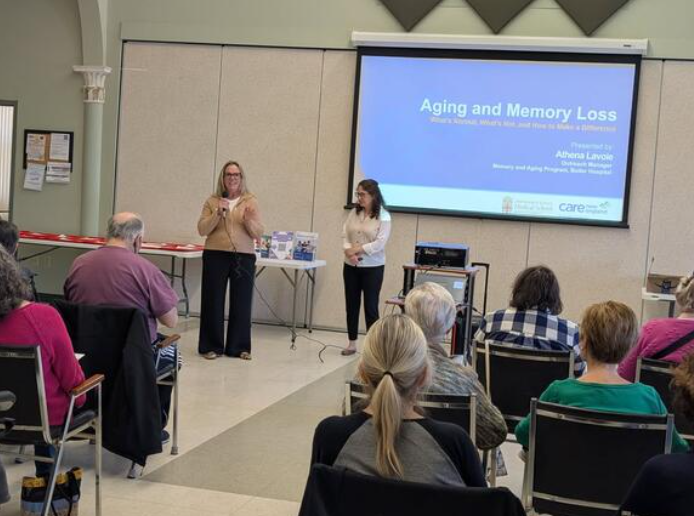
Representatives from Butler Hospital’s Memory and Aging Program and the Global Alzheimer’s Platform recently visited the Swansea Council on Aging to discuss normal memory changes with age and new research in Alzheimer’s prevention. The session also encouraged residents to engage with the Acti-v8 initiative and join a prevention registry.

This content is adapted from materials provided by Swansea Council On Aging

This article includes content summarized and organized with AI tools, which can make mistakes. Learn more.

https://www.newsbreak.com/swansea-ma-daily-brief-373342322/4618854465804-experts-share-updates-on-memory-and-aging

PR NewsWire: Re:Cognition Health Delivers Landmark International Clinical Trial to Explore Whether a Simple Finger-prick Blood-based Biomarker Test Can Provide Earlier Alzheimer’s Diagnosis

Houston, Texas (April 15, 2026) – Re:Cognition Health, a global leader in new treatments for Alzheimer’s Disease, is delivering an international clinical trial to evaluate whether a simple finger-prick blood test can revolutionize how Alzheimer’s disease is diagnosed. Compared with the current invasive and expensive diagnostic methods, this approach could provide a scalable solution for an earlier, easier, more accurate, affordable, and accessible diagnostic method. Re:Cognition Health will contribute to the enrollment of approximately 1,000 participants in the Bio-Hermes study, which is happening across the United Kingdom, the United States (Houston, TX), and Canada.

Early diagnosis remains one of the greatest challenges in Alzheimer’s care. Historically, clinicians have relied on costly brain imaging, invasive lumbar punctures, or the emergence of clinical symptoms, often after the disease has significantly progressed. This study represents a potential critical turning point, with implications for patients, families, and clinicians worldwide.

“Delivering this study underscores our commitment to advancing earlier and more precise diagnosis,” said Dr. Emer MacSweeney, Consultant Neuroradiologist and CEO of Re:Cognition Health, whose team has more than 12-years of experience delivering biomarker-led clinical trials. “Biomarkers are transforming how we identify and treat Alzheimer’s disease, and this research moves us closer to a future where early intervention is the normal practice, and not the exception.”

Participants in the trial will include cognitively normal individuals, those with mild cognitive impairment, and those with mild to moderate Alzheimer’s disease. The trial also prioritizes inclusivity, with at least 25 percent of participants recruited from underrepresented communities, helping address longstanding gaps in Alzheimer’s research.

Researchers will analyze the blood samples for three key proteins associated with Alzheimer’s disease. Results will be compared against traditional diagnostic methods, including amyloid PET scans, MRI imaging, and traditional speech and cognitive assessments.

“Biomarkers allow clinicians to identify the biological processes of Alzheimer’s disease well before symptoms become disabling,” Dr. MacSweeney added. “This is critical, as amyloid-targeting therapies such as Kisunla™ and Leqembi® are most effective—and currently only available—when cognitive symptoms are still mild.”

Looking ahead, blood-based biomarker testing could be used before symptoms arise to identify individuals at risk, enabling preventive strategies and earlier intervention in both primary and secondary care settings worldwide.

“amyloid-targeting therapies such as Kisunla™ and Leqembi® are most effective—and currently only available—when cognitive symptoms are still mild.”

Re:Cognition Health has been at the forefront of advancing treatments to slow the progression of Alzheimer’s Disease, from the early stages of clinical trials through FDA approvals and now treatment administration. Its clinical team is extremely experienced in these treatments, having administered more than 12,500 doses of amyloid-targeting therapies in the United States and the United Kingdom.

The study is led by the Global Alzheimer’s Platform Foundation (GAP), with funding from LifeArc and support from the UK Dementia Research Institute.

For more information, call 1-888-437-0813. https://www.recognitionhealthusa.com/recognition-health-delivers-landmark-international-clinical-trial-to-explore-whether-a-simple-finger-prick-blood-based-biomarker-test-can-provide-earlier-alzheimers-diagnosis/

Clinical Lab Products: Clinical Trial to Evaluate Finger-Prick Blood Test for Alzheimer’s Diagnosis

Apr 17, 2026 | Dementias & Alzheimer’s, Immunoassay |     

Clinical Trial to Evaluate Finger-Prick Blood Test for Alzheimer’s Diagnosis

The study will analyze three key proteins to determine if blood-based biomarkers can provide an earlier and more accessible diagnostic method.


Re:Cognition Health is delivering an international clinical trial to evaluate whether a finger-prick blood test can improve how Alzheimer’s disease is diagnosed. Compared with current invasive and expensive diagnostic methods, this approach aims to provide a scalable solution for an earlier, more accurate, and affordable diagnostic method.

The clinical trial will enroll approximately 1,000 participants across the United Kingdom, the United States (US), and Canada. Participants in the trial include cognitively normal individuals, those with mild cognitive impairment, and those with mild to moderate Alzheimer’s disease. The trial also prioritizes inclusivity, with at least 25% of participants recruited from underrepresented communities to address historical gaps in research.

Comparing Biomarkers to Traditional Diagnostics

Researchers will analyze the blood samples for three key proteins associated with Alzheimer’s disease. The results will be compared against traditional diagnostic methods, including amyloid positron emission tomography (PET) scans, magnetic resonance imaging (MRI), and traditional speech and cognitive assessments.

“Delivering this study underscores our commitment to advancing earlier and more precise diagnosis,” says Emer MacSweeney, consultant neuroradiologist and CEO of Re:Cognition Health, in a release. “Biomarkers are transforming how we identify and treat Alzheimer’s disease, and this research moves us closer to a future where early intervention is the normal practice, and not the exception.”

Historically, clinicians have relied on costly brain imaging, invasive lumbar punctures, or the emergence of clinical symptoms, which often appear after the disease has significantly progressed. Blood-based biomarker testing could be used before symptoms arise to identify individuals at risk, enabling preventive strategies and earlier intervention in primary and secondary care settings.

Impact on Amyloid-Targeting Therapies

The identification of biological processes before symptoms become disabling is essential for the effective use of new treatments.

“Biomarkers allow clinicians to identify the biological processes of Alzheimer’s disease well before symptoms become disabling,” says MacSweeney in a release. “This is critical, as amyloid-targeting therapies such as Kisunla and Leqembi are most effective—and currently only available—when cognitive symptoms are still mild.”

The study is led by the Global Alzheimer’s Platform Foundation, with funding from LifeArc and support from the UK Dementia Research Institute. Re:Cognition Health has experience in biomarker-led clinical trials and has administered more than 12,500 doses of amyloid-targeting therapies across the US and the United Kingdom.

ID 147487193 © Djedzura | Dreamstime.com https://clpmag.com/disease-states/dementias-alzheimer/finger-prick-blood-test-alzheimers-diagnosis-clinical-trial/ 

Medical Laboratory Observer: Siemens Healthineers joins Bio-Hermes-002 Study for Alzheimer’s research

Siemens Healthineers has become a licensed partner in the Bio-Hermes-002 Alzheimer’s study.

Erin Brady April 13, 2026

69dd001f5fc1132495f7f29f Dreamstime Xxl 66091351

The Global Alzheimer’s Platform Foundation (GAP) has announced that Siemens Healthineers has joined the Bio-Hermes-002 study alongside several other industry leaders. Siemens is now a licensed partner of the study, aiming to enhance Alzheimer’s diagnostics.

Specifically, Siemens Healthineers will work to “change the paradigm of early-stage disease diagnostics and monitoring, building upon findings from Bio-Hermes-001.” The Bio-Hermes-002 study will analyze biomarker data stored on the secure AD Workbench to “assess, diagnose or predict” disease presence/risk. https://www.mlo-online.com/disease/news/55370392/siemens-healthineers-joins-bio-hermes-002-study-for-alzheimers-research

Voices of Healthcare: GAP, Siemens Healthineers Partner for Bio-Hermes-002 Alzheimer’s Study

The Global Alzheimer’s Platform Foundation (GAP) has announced a strategic collaboration with Siemens Healthineers for the Bio-Hermes-002 study, an observational platform designed to evaluate biomarkers for Alzheimer’s disease and related dementias.

The study compares blood-based and digital biomarkers across a wide range of cognitive conditions, alongside MRI and PET imaging data, to generate insights that may support early prediction, detection, and diagnosis of neurodegenerative diseases.

Bio-Hermes-002 aims to assess the performance of individual and combined biomarkers in identifying pathologies associated with Alzheimer’s disease, including amyloid and tau proteins in the brain. Siemens Healthineers will participate as a licensed partner, building on earlier findings from the Bio-Hermes-001 study.

“We’re proud to have Siemens Healthineers as a valued partner in the Bio-Hermes-002 study,” said John Dwyer, President of GAP. “With a shared goal of speeding diagnostics and the discovery of therapies for neurodegenerative diseases, this collaboration will enhance our scale and better integrate the entire spectrum of blood markers and imaging technology that needs to be brought to bear on clinical practice and research. We anticipate making great progress across the entire neurological technology waterfront with Siemens Healthineers’ involvement and are eager to get started.”

Data generated from the study will be stored on the AD Workbench, a global cloud-based data platform developed under the Alzheimer’s Disease Data Initiative (ADDI), enabling researchers to access and analyse data across multiple sources.

“Partnering with GAP for the Bio?Hermes?002 study is a timely opportunity to better understand how blood?based and digital biomarkers may help identify patients for neuroimaging and treatment earlier,” said Arejas J. Uzgiris, PhD, head of Clinical and Technology Innovation for North America for Diagnostics at Siemens Healthineers. “Generating evidence for use of earlier and broader testing to inform downstream clinical pathways is a critical step toward improving diagnosis and access to care.”

https://vohnetwork.com/news/global/gap-siemens-healthineers-partner-for-bio-hermes-002-alzheimer-s-study